top of page
pêche Bilieu

“Clean Lake” operation

Every summer, the many visitors to our shores leave behind their share of litter: bottles, cans, plastic bags, cigarette butts, picnic leftovers... Left on the shore or carried off by the water, this waste damages our banks, threatens the lake's wildlife and plants and spoils the beauty of a place we all cherish. Once again this year, the Société du Lac de Paladru invites everyone who uses the lake to give up a morning to restore our shores to the cleanliness they deserve.

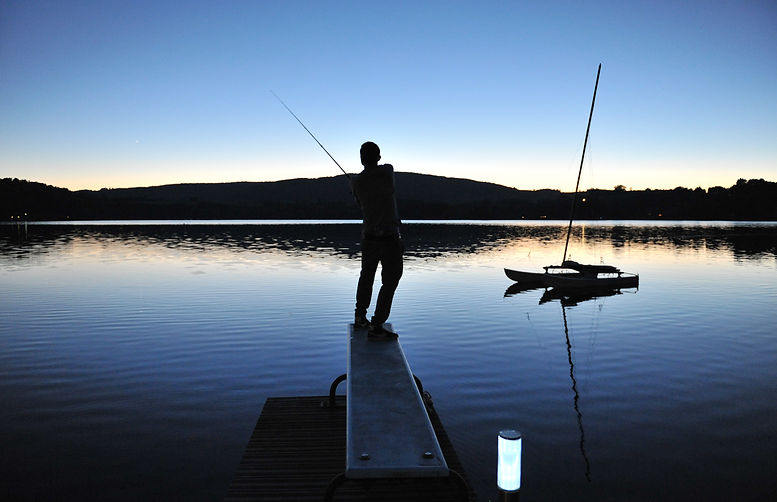
Opération Lac Propre - Lac de Paladru.jpg

Saturday 3 October 2026, 8 am to 12 noon

Two meeting points: the Capitainerie in Paladru

(635 rue du Petit Port) and the Charavines fish farm

(next to the launch ramp)


Sensitive area of La Lésine, starting from the Charavines fish farm

Bring gloves and suitable footwear — bags provided on site

Drinks and snacks from noon at the Capitainerie

“Let's take care of our Blue Lake!”

Join the volunteers, associations, clubs and anglers of Lake Paladru

Lake Paladru water level

 - 170 cm approx.
Temperature 21°C

The sluice gate outflow is 300 l/s.

2021–2026 reed replanting campaign

This new campaign began in 2021. The Société is committed to maintaining the balance of the lake's ecosystem. Reeds have been disappearing for decades, which makes this a real challenge, so in 2021 we launched a campaign to replant reeds on sites damaged by heavy use and excessive fluctuations in water level. It is worth noting that our colleagues at Lake Aiguebelette share the same goal, even if their methods differ.


Why does this matter to us?

  • Reed beds shelter dragonflies, amphibians, fish, birds and mammals from predators, especially during the breeding season.

  • Reeds help fight water pollution in aquatic areas.

  • Their roots naturally filter surface water.

  • Reed beds are spawning grounds for fish and amphibians.

  • They protect the banks from erosion


We replanted 5 additional protected areas in June.

The results on the effectiveness of the method will help us extend and improve our work.

Although the Phragmites australis seeds were collected from our own ecosystem, we do not yet know whether the plants will take hold.


Replanting method: 

         1 - Choose the most effective type of plant (mini root balls, 2 L container, 30 L container) and measure how far it spreads around the planting point 

         2 - Determine the best elevation for future planting. This depends closely on the high and low water levels of the lake. 

         3 - Identify the most suitable type of substrate
         4 - Control predation on the young plants (rodents, fish, 

ducks...)


Project stages

Winter 2021

- seed collection

Spring 2022

- sowing trials with seeds from Lake Paladru

Summer 2022

- preparation of 2 L and 30 L containers with seed-grown plants

- preparation of 9 × 9 cm pots with rhizomes

- preparation of 2 L and 30 L containers with rhizomes

Spring 2023

- growing on the 2023 mini root balls

Summer 2023

- building enclosures for the test plots and planting

Peche Lac de paladru  2017

The Blue Lake voted No. 1 WONDER of North Isère

A must-see landscape of North Isère, where the whole department flocks as soon as the sun comes out. Lake Paladru, also known as the Blue Lake, was voted by readers of Le Dauphiné Libéré the No. 1 wonder of the Tour-du-Pin area and North Dauphiné. Dive in and discover this remarkable site.

The Société du Lac: a little history

Lake Paladru has always been private property. It was contributed to the Société du Lac de Paladru when the company was founded in 1874. ​ The purpose of the Société is: the ownership, operation and enjoyment of the lake, the management of the lake and the protection of its plants and wildlife. For a long time, the use of the lake – boating, swimming, fishing and hunting – was reserved for the Société's shareholders, apart from the fishing rights over one third of the lake on the Charavines side, granted to the inhabitants of Colletière by a deed of gift of 1492 that is still in force. ​ In the early 20th century, the lake was mainly the domain of professional fishermen. Tourism gradually developed: hotel bathing was allowed in the 1910s, then the municipal beaches of Paladru in 1938, Le Pin in 1945 and Charavines in 1961. Boating followed: first rowing boats, then sailing from around 1930, and finally motorboats. Given the size of the lake, nautical activity became so intense that boating and swimming had to be regulated. The Société's first regulations date from 1970. In 1975, a decree made navigation on inland waters subject to ministerial authorisation. The first prefectural order covering all nautical activities on the lake, adopted in agreement with the Société, dates from 1979. It provides that the use of any boat on the lake requires the prior approval of the Société du Lac de Paladru. A 60-seat excursion boat was authorised in 1985 and 1986; for lack of results, this private venture ended. From 1995, the Société created 100 berths and 200 mooring lines. The water of Lake Paladru, renowned for its clarity, gradually deteriorated, especially from 1957 onwards. As it could not be held responsible for this pollution, the Société turned to the local authorities, which in 1976 installed a siphon to draw off deep water and built a sewer network around the lake.   The lake level is regulated by a system of sluice gates at Charavines, installed in 1868 to supply water to the mills along the Fure river. It is managed by the Syndicat des Usiniers de la Fure. Since 2009, a prefectural order has set the outflow of these gates according to the lake level and the time of year. The Société is not directly responsible for the water level, but it intervenes with the prefectural authorities when the level drops too sharply.   The Société has authorised underwater excavation campaigns since 1970. It donated all the objects found to the Isère department, on the sole condition that they be displayed in a museum on the lakeshore.

The Société du Lac: income and expenditure

The Société du Lac de Paladru upholds the necessary balance between the activities that take place on the lake: fishing, sailing, rowing, diving, water-skiing, walking, archaeological excavations and respect for the environment. It strives to preserve family-friendly tourism and the tranquillity of the site. Fishing management is delegated to the Paladru Anglers' Association. Hunting is prohibited.   The Société's income comes from: -       the fishing lease fee, -       fees for the pontoons and beaches covered by negotiated agreements or leases; these fees were set by comparison with those charged by the State for the lakes of Savoie, -       boat navigation permits, -       mooring fees.   This income allows the Société to fund: the lake wardens, who monitor the lake, assist with safety and maintain it (reed beds, cleaning): 2 wardens all year round plus 1 or 2 in summer as needed, regular water-quality analysis, the protection and regeneration of the reed beds, the construction and upkeep of berths and moorings.

bottom of page